News Story
On Thursday 11 June, Birmingham will step back into one of music’s most iconic decades as 80s Classical arrives at Symphony Hall Birmingham- bringing together legendary artists, timeless songs, and the full orchestral power of the Orchestra of Opera North.
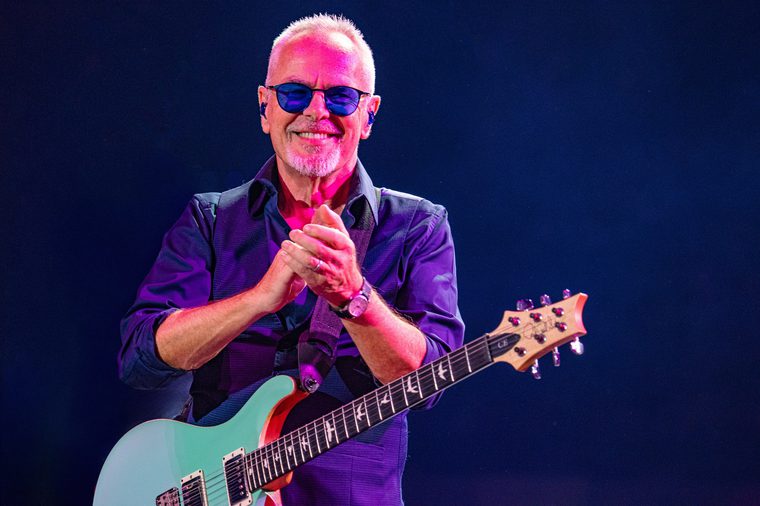
Among the performers is Nik Kershaw, whose catalogue of 80s hits including Wouldn’t It Be Good will be reimagined on a grand symphonic scale alongside Jaki Graham, Johnny Hates Jazz, and the Orchestra of Opera North.

Book now: 80s Classical: With Nik Kershaw, Johnny Hates Jazz & Jaki Graham
Thursday 11 June | Symphony Hall | 7:30PM
The orchestra makes the music feel bigger and more important.
Speaking about the concept of 80s Classical, Kershaw reflects on how the project first began taking shape several years ago.
“I was first approached about this around five or six years ago, when we started doing 80s Classical at Millennium Square in Leeds, and it quickly became a regular event,” he explains. “I already knew Cliff Masterson, who runs and orchestrates the whole thing, and when he told me about the concept, it felt like a great opportunity- not to reinvent the songs, but to approach them from a completely different angle.”
For Kershaw, the experience of performing with a full orchestra continues to be something uniquely powerful.
“There’s something truly magnificent about it. I’ve loved classical music since I was a kid- I used to listen to it a lot and go to the Proms with my parents- so to now find myself on stage with a full orchestra is very special. It’s quite humbling. You realise you’re just one small part of something much bigger.”
He adds that hearing familiar songs transformed on this scale is still a thrill.
“These were songs I originally pieced together with a band in a studio all those years ago. To hear them brought to life with that kind of attention and scale is incredible.”
A different kind of live experience
80s Classical offers audiences something beyond a traditional concert experience- something Kershaw believes changes the way the music is perceived.
“It’s just a different kind of experience. I wouldn’t necessarily say it’s more of a night out, but it’s certainly a different one- you can almost pretend you’re being a bit sophisticated for the evening!”
He continues: “An orchestra brings a real sense of scale. It gives the songs weight and richness you don’t get with a standard band setup. There’s a gravitas to it- it makes the music feel bigger, more important.”
For many in the audience, this will also be their first encounter with a full orchestra.
“You never quite know what’s brought people into the auditorium. Some might be fans of mine or the other artists, but for some it could be their first classical concert, hearing familiar songs in a completely new way.”
And there are few better places to experience that than Birmingham itself.
“Symphony Hall is a pretty special place for that,” he says. “I’ve played there several times over the years, including with Go West, and it’s a fantastic venue. The acoustics are incredible- it really is a beautiful space to perform in.”
The enduring spirit of 80s music
Reflecting on the decade that shaped his career, Kershaw highlights just how eclectic and experimental the 80s really were.
“It was a time when music technology was really taking off- new Japanese keyboards and sampling machines were everywhere, and people were experimenting constantly.”
But for him, the diversity of the charts is just as defining.
“You could have someone like Matt Bianco alongside folk, American rock, straight-up pop- everything was in the Top 10 at once. It felt incredibly varied, and I don’t think you see that in quite the same way now.”
He also notes how audiences engaged with music differently.
“People really bought records, collected vinyl, and invested themselves in artists. It felt more immersive. And it’s interesting that vinyl is coming back- it’s great for artists and for music culture.”
A shared stage, a shared history
Sharing the stage with fellow 80s icons is part of the event’s unique atmosphere.
“Well, none of us get on!” he laughs. “Only joking. I get on with everyone. Jaki Graham and the Johnny Hates Jazz guys are just lovely.”
Johnny Hates Jazz and Jaki Graham are part of what makes the tour so enjoyable, he says.
“Since the retro festivals really took off in the mid-2000s, I’ve become friends with people I didn’t even meet back in the day. We’ve all been through similar ups and downs, so there’s a shared understanding. Everyone’s just happy to be there- and grateful people are still coming to hear the songs.”
Rediscovering the songs through orchestration
Performing with an orchestra also subtly changes how Kershaw approaches his own vocals.
“It really depends on the song. Most of the time I just sing them as normal. But in a couple of arrangements with Cliff Masterson, I have to be more aware of what’s happening around me.”
“It becomes more of a conversation- you respond to the orchestra as much as your own performance. That’s a really enjoyable way to work.”
And surprisingly, the orchestral format has reshaped how he hears his own back catalogue.
“You get so used to your older songs that you almost stop hearing them. But with an orchestra, you suddenly think- actually, that’s a pretty good song.”
“With a band it’s more of a joyful racket, all energy and groove. But with an orchestra, it brings out the melody and harmony much more clearly.”
A multi-generational audience
One of the most striking aspects of 80s Classical is its cross-generational appeal.
“I see people of all ages coming to these concerts now. There are long-time fans who bring their kids, and now there are teenagers and people in their twenties too.”
“Quite often they’ll say they found my music on YouTube. There are pros and cons to the internet, but for artists it means everything is out there- if people want to discover you, they can.”
And the way different generations connect with the music varies.
“Younger audiences are discovering the songs as songs. Older audiences have memories attached- it takes them right back to where they were when they first heard them.”
From resistance to rediscovery
Like many artists, Kershaw admits he once struggled with revisiting older material.
“In the early 2000s I went through a phase of being a bit fed up with the older songs. I even changed the arrangements to keep things interesting, but the audience wasn’t too keen- they wanted the versions they knew.”
“I’ve come full circle now. The songs are much closer to the originals again, but they still feel fresh because every performance is slightly different.”
Looking ahead to Birmingham
Kershaw’s connection with Birmingham spans decades, from early gigs at the Birmingham Odeon to more recent solo performances at Birmingham Town Hall.
“Birmingham audiences have always been warm and enthusiastic,” he says. “And Symphony Hall is just outstanding. I’m really looking forward to coming back.”